IN THE NEWS:
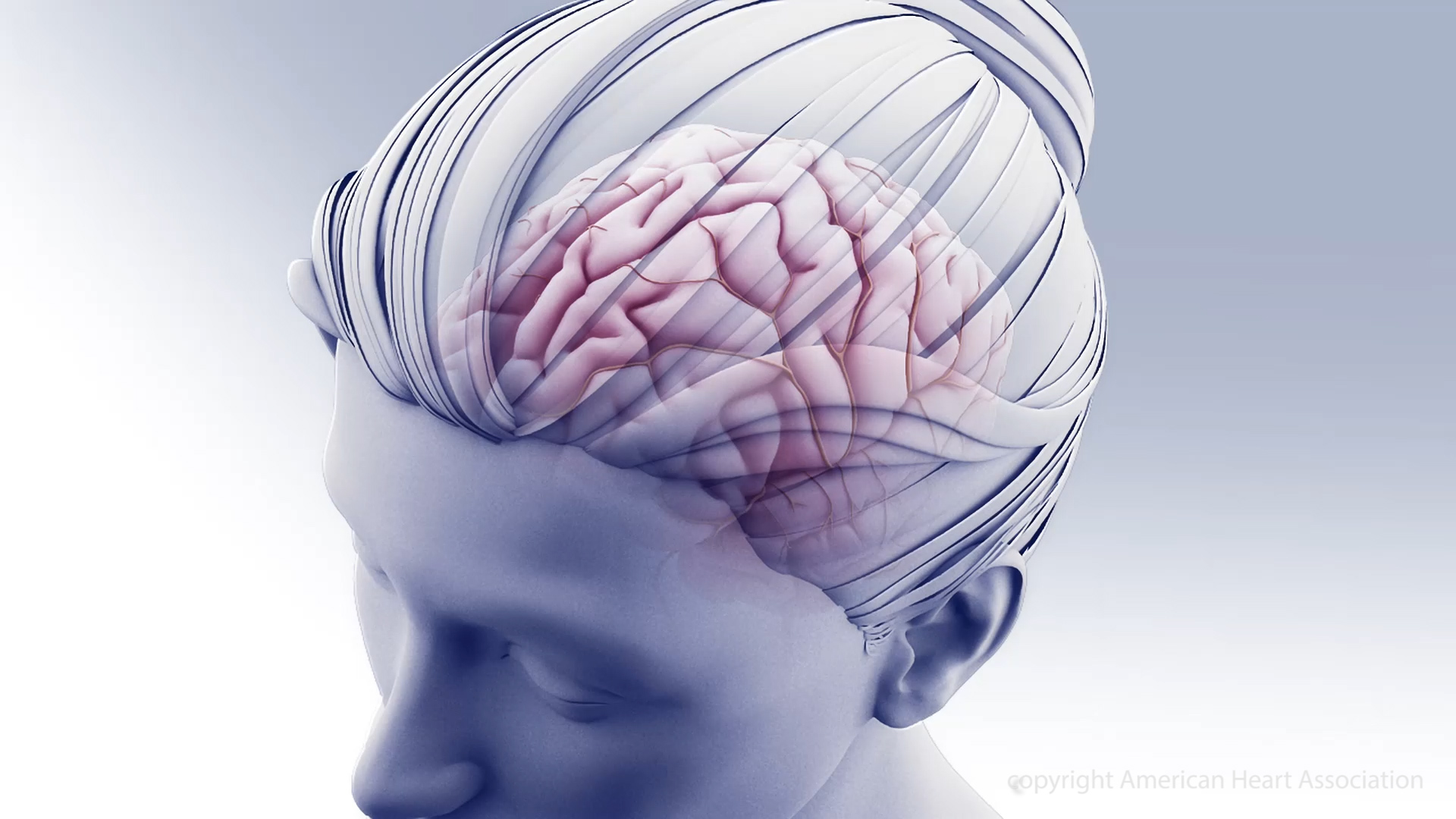
Knowing stroke signs can save a life when every minute counts - The American Stroke Association highlights how recognizing B.E. F.A.S.T. warning signs and acting quickly can help people get lifesaving care sooner.
Spanish News Release | VIDEO: B.E. F.A.S.T. PSA | Interactive B.E. F.A.S.T. Experience

7 honorees nationwide are redefining what life after stroke can look like - Through the Stroke Hero Awards, the American Stroke Association highlights the powerful stories of survivors of stroke, caregivers and community champions.
Spanish news release

Brain health shaped by lifetime mental, physical, environmental and lifestyle factors - More research is needed to assess how everyday factors from early life through adulthood influence brain health and affect the risk of developing cognitive decline, dementia or stroke, according to a new American Heart Association scientific statement.
Spanish news release
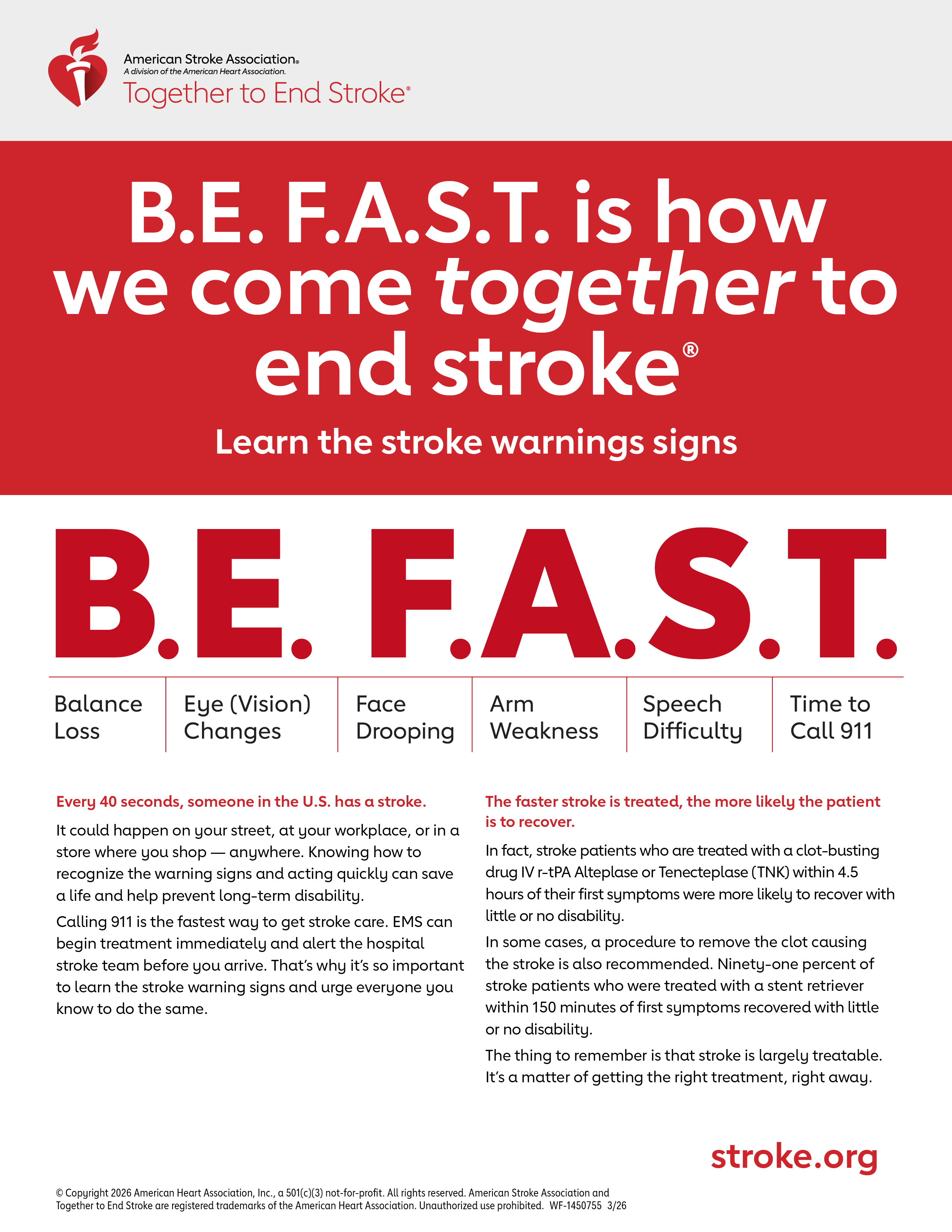
B.E. F.A.S.T. Warning Signs
Recognize the warning signs of stroke and call 9-1-1 immediately.
B = Balance Loss
Is there a sudden loss of balance or coordination? Is the person having trouble walking or experiencing dizziness?
E = Eye (Vision) Changes
Are there sudden changes in vision? Ask the person if they are experiencing blurred vision, double vision, or loss of sight in one or both eyes.
F = Face Drooping
Does one side of the face droop, or is it numb? Ask the person to smile. Is the person's smile uneven?
A = Arm Weakness
Is one arm weak or numb? Ask the person to raise both arms. Does one arm drift downward?
S = Speech Difficulty
Is speech slurred or difficult to understand? Ask the person to repeat a simple sentence.
T = Time to Call 911
If you have any of these symptoms or see someone else having them, call 911 immediately!
Learn more about these and other warning signs of stroke.
Link to B.E.F.A.S.T. Infographic full transcript and stroke.org
copyright American Heart Association.
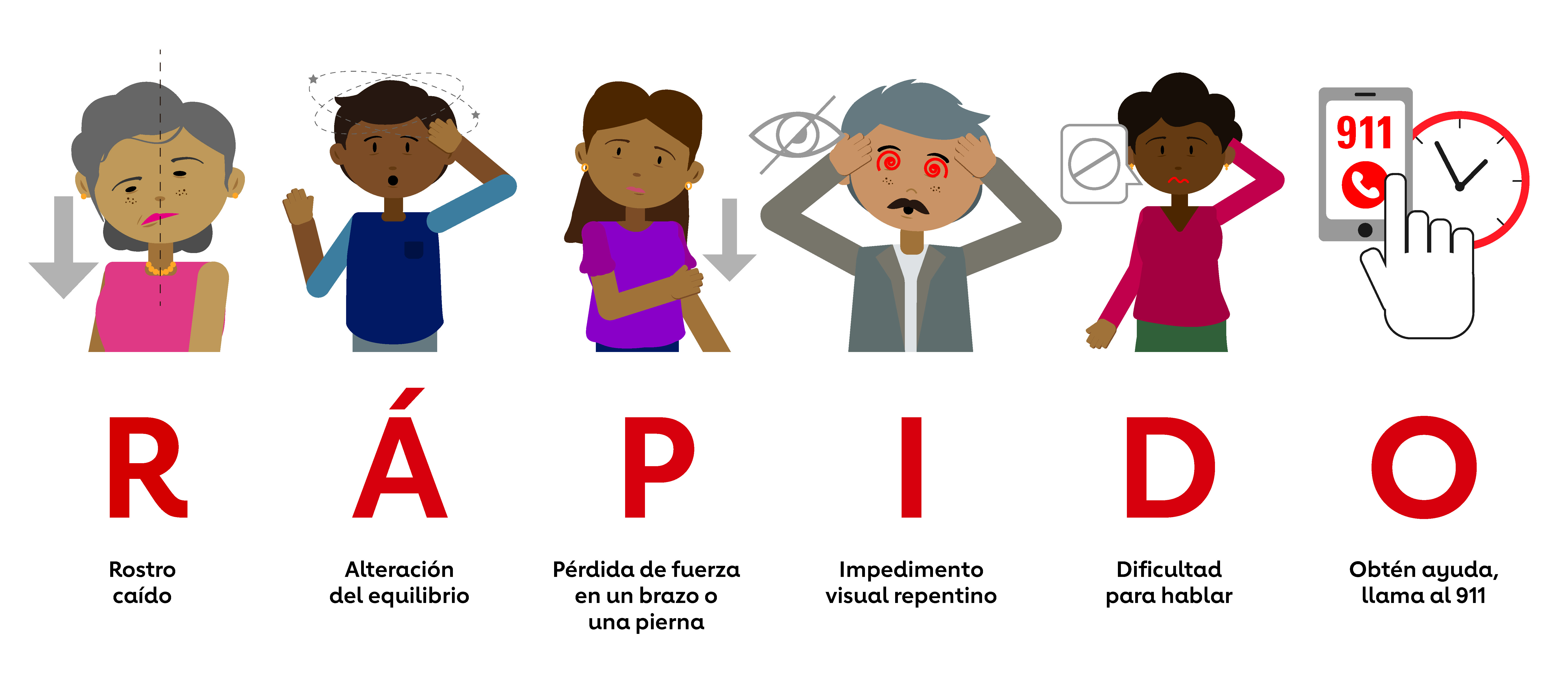
Identifique un derrame cerebral R.Á.P.I.D.O.:
- R - Rostro caído (Face drooping)
- Á - Alteración del equilibrio (Loss of Balance, or Lack of Coordination)
- P - Pérdida de fuerza en el brazo (Arm weakness)
- I - Impedimento visual repentino (Sudden vision difficulty)
- D - Dificultad para hablar (Slurred or Strange Speech)
- O - Obtener ayuda, llamar al 911 (Get help, call 911)
Tome medidas para prevenir el derrame cerebral ahora para poder estar presente más adelante. Obtenga más información en Stroke.org/Espanol.
5
Key Facts About Stroke
Fact #1: Stroke kills brain cells - Stroke happens when a clot or rupture interrupts blood flow to the brain. Without oxygen-rich blood, brain cells die.
Fact #2: Types of stroke - Ischemic caused by a clot, Hemorrhagic caused by a rupture and Transient Ischemic Attack (TIA) or “warning stroke” caused by a temporary blockage.
Fact #3: About one in four stroke survivors is at risk for another - Fortunately, up to 80 percent of second clot-related strokes may be preventable.
Fact #4: Prevention is key - Had a stroke? Work with your doctor to identify the cause and create a plan to prevent another. This may include managing high blood pressure, making healthy lifestyle choices and taking medications as recommended by your doctor.
After
an ischemic stroke or TIA, most patients will be prescribed an antiplatelet or
anticoagulant therapy.
Fact #5: Time lost is brain lost - B.E. F.A.S.T. and call 9-1-1.
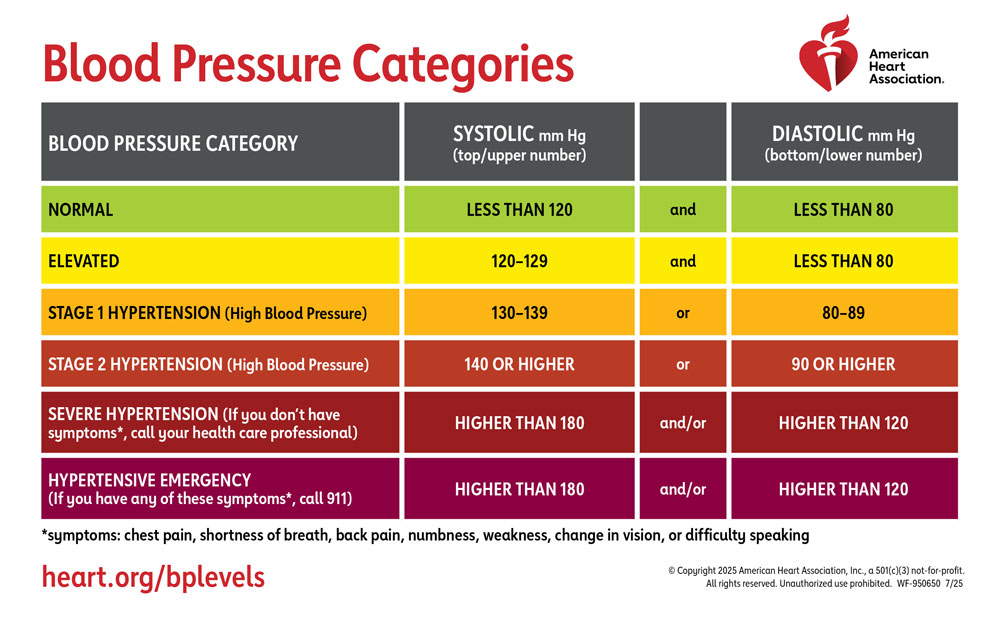
- Most of the time there are no obvious symptoms.
- Certain physical traits and lifestyle choices can put you at a greater risk for high blood pressure.
- When left untreated, the damage that high blood pressure does to your circulatory system is a significant contributing factor to heart attack, stroke and other health threats.
Infographic Transcript (doc) | Categorías de presión arterial Infografía (JPEG) - Accessible Spanish PDF
2025 High Blood Pressure Guideline news release
copyright American Heart Association
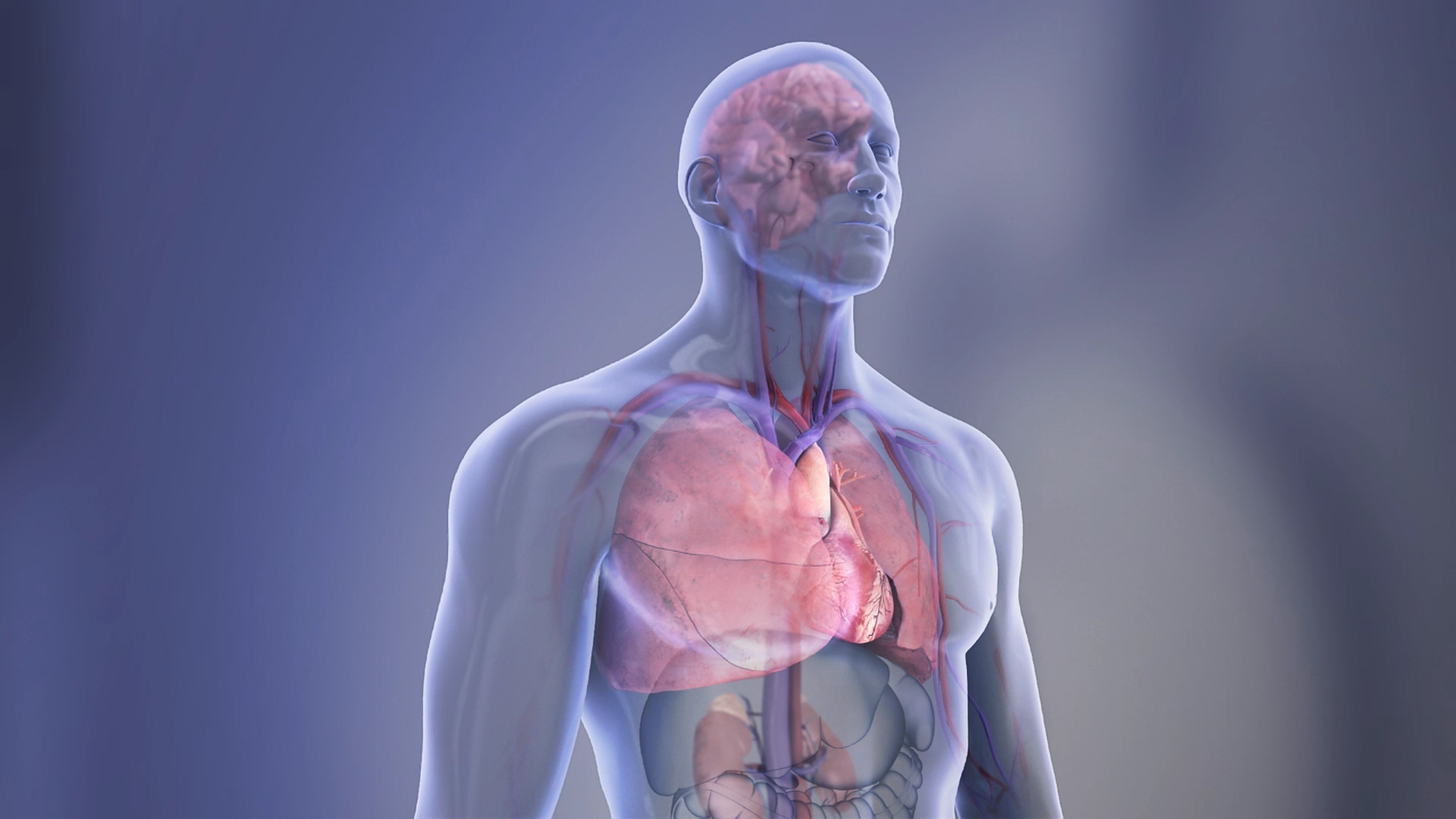
Whole body wellness can help you feel stronger, healthier and mentally sharp – and it can also reduce your stroke risk.
It’s never too late to start making healthier choices:
- Get enough sleep - Adults need 7-9 hours per night. Teenagers and children need more.
- Get regular check-ups - Schedule regular visits with your health care provider. Talk about how to control or manage your risk factors.
- Move more, sit less
- Aim for 150 minutes of moderate aerobic exercise or 75 minutes of vigorous exercise (or a combination) per week.
- Eat Healthy Increase the amount of fruits and vegetables you eat.
- Reduce your intake of sodium, added sugar, and saturated and trans fats.
- Don’t smoke or vape If you currently smoke or vape, quit.
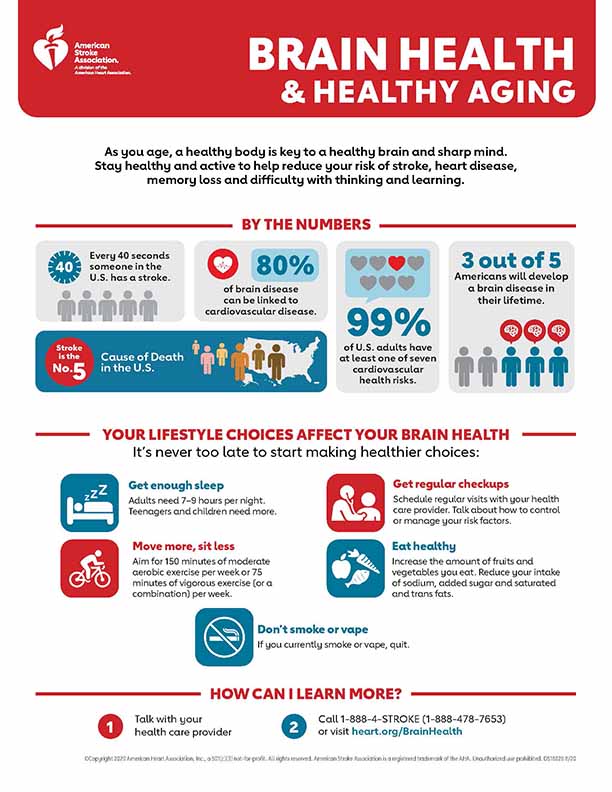
Stay healthy and active to help reduce your risk of STROKE, heart disease, memory loss and difficulty with thinking and learning.

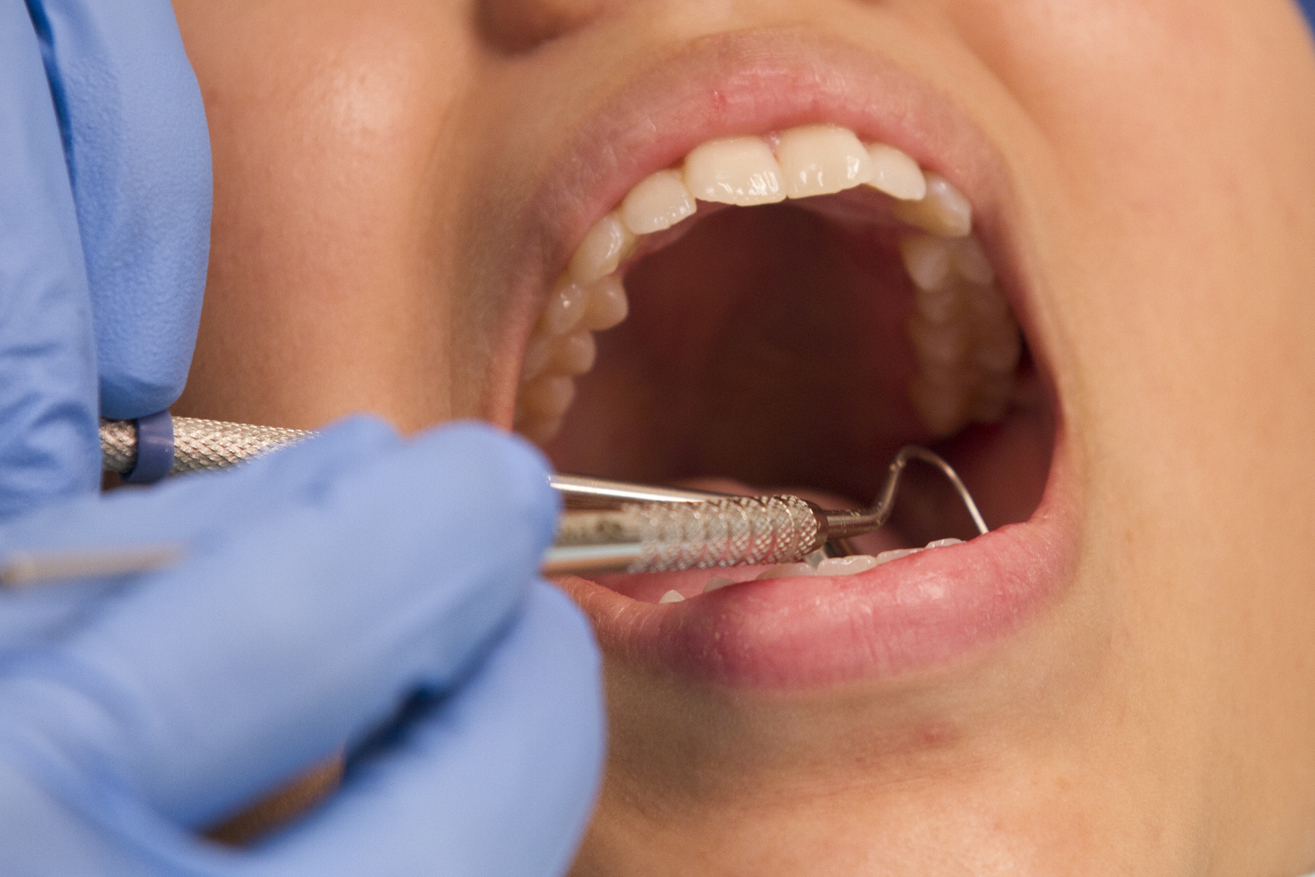
May is National Dental Care Month
News release: Regular dental flossing may lower risk of stroke from blood clots, irregular heartbeats (1 - 2025)
News release: A common mouth and gut bacteria may be linked with increased stroke risk (1-2025)
News release: New initiative focuses on oral health clinicians in prevention and early detection of heart disease (Jan 2024)
Scientific statement: Good dental health may help prevent heart infection from mouth bacteria (4-2021)
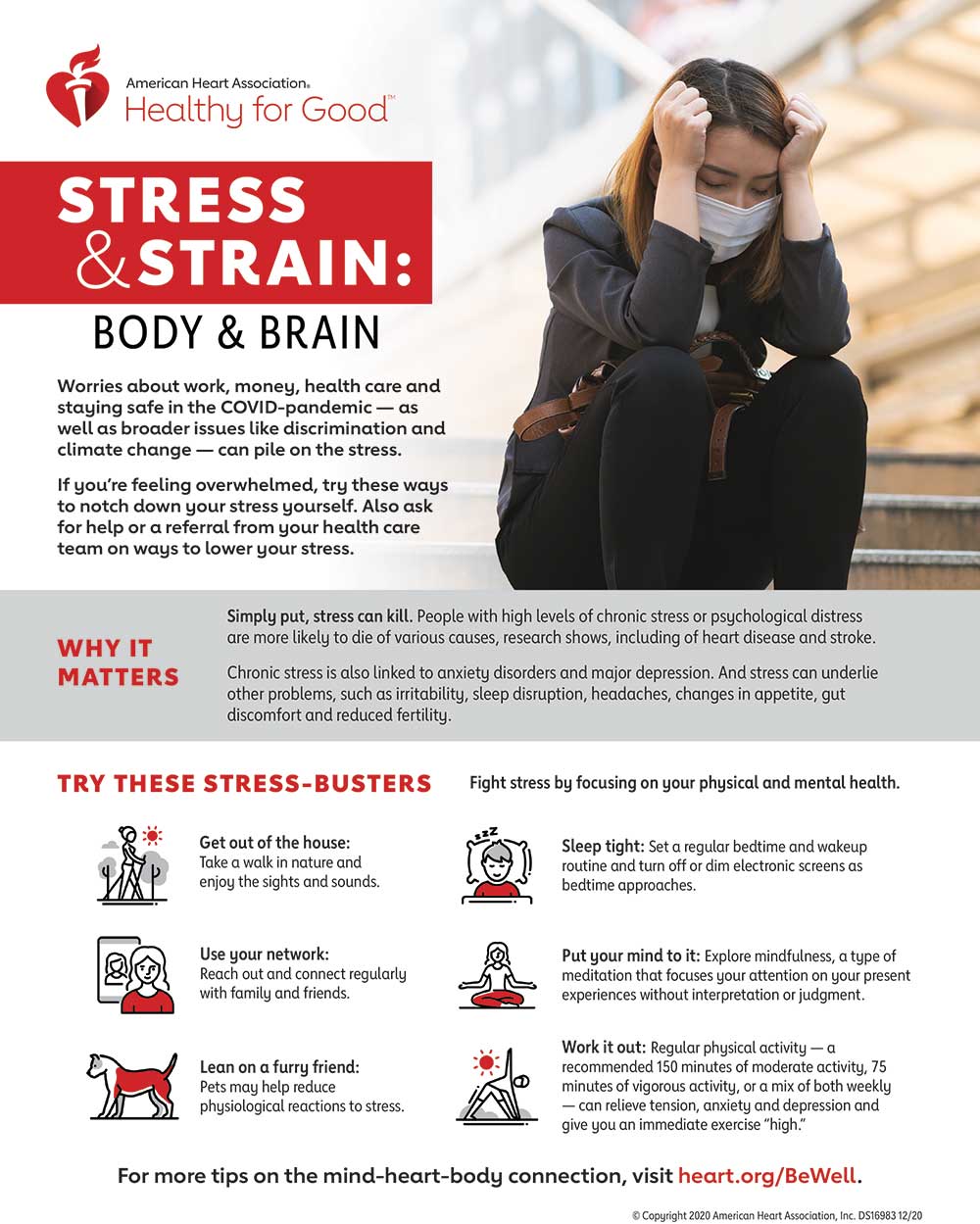
Mental Health Awareness Month- Time to Manage Stress and Your Health
While you may feel too busy to de-stress – you can decide to take back your “me time,” one moment at a time.
Did you know?
- Higher levels of the stress hormone cortisol is linked to a higher risk of high blood pressure, heart disease and stroke?
- Between work, family and world events – too many of us are running on empty for the sake of others, particularly women. Constant, chronic stress can have real impacts on health.
- That’s why the American Heart Association is sharing science-backed tips for managing stress for better health.

Need help quitting? 5 Steps to Quit Smoking and Vaping | Living Tobacco-Free | Smoking and Heart Disease in Women
National Women’s Health Month
- Nearly 45% of women ages 20+ are living with some form of cardiovascular disease.
- Less than half of women entering pregnancy in the U.S. have optimal cardiovascular health.
- Women experience unique life stages, such as pregnancy and menopause, that can put them at an increased risk for CVD.
More May Calendar Highlights
American Stroke Month, Blood Pressure Education Month, Better Sleep Month, Mental Health Awareness Month, National Women’s Health Month, National Physical Fitness & Sports, Asian American, Native Hawaiian and Pacific Islander Month and Global Employee Health and Fitness Month, National Salsa Month as well as other important dates below.

Looking ahead to June:
National CPR and AED Awareness Week is June 1-7 to stress the importance of CPR and AED use.
More Resources:
- American Heart Association Fact Sheets
- Follow the latest National Science and Program News and Your Local News (search by category/region)
Follow @HeartNews | Connect with us
