



Extreme heat is rising — and so is the risk to your heart.
The American Heart Association urges extra precautions as temperatures climb nationwide
News release | Spanish News release
Think you’re ready to brave the heat? It’s best to avoid the outdoors in the early afternoon (about noon to 3 p.m.) because the sun is usually at its strongest, putting you at higher risk for heat-related illnesses. More tips here and below.
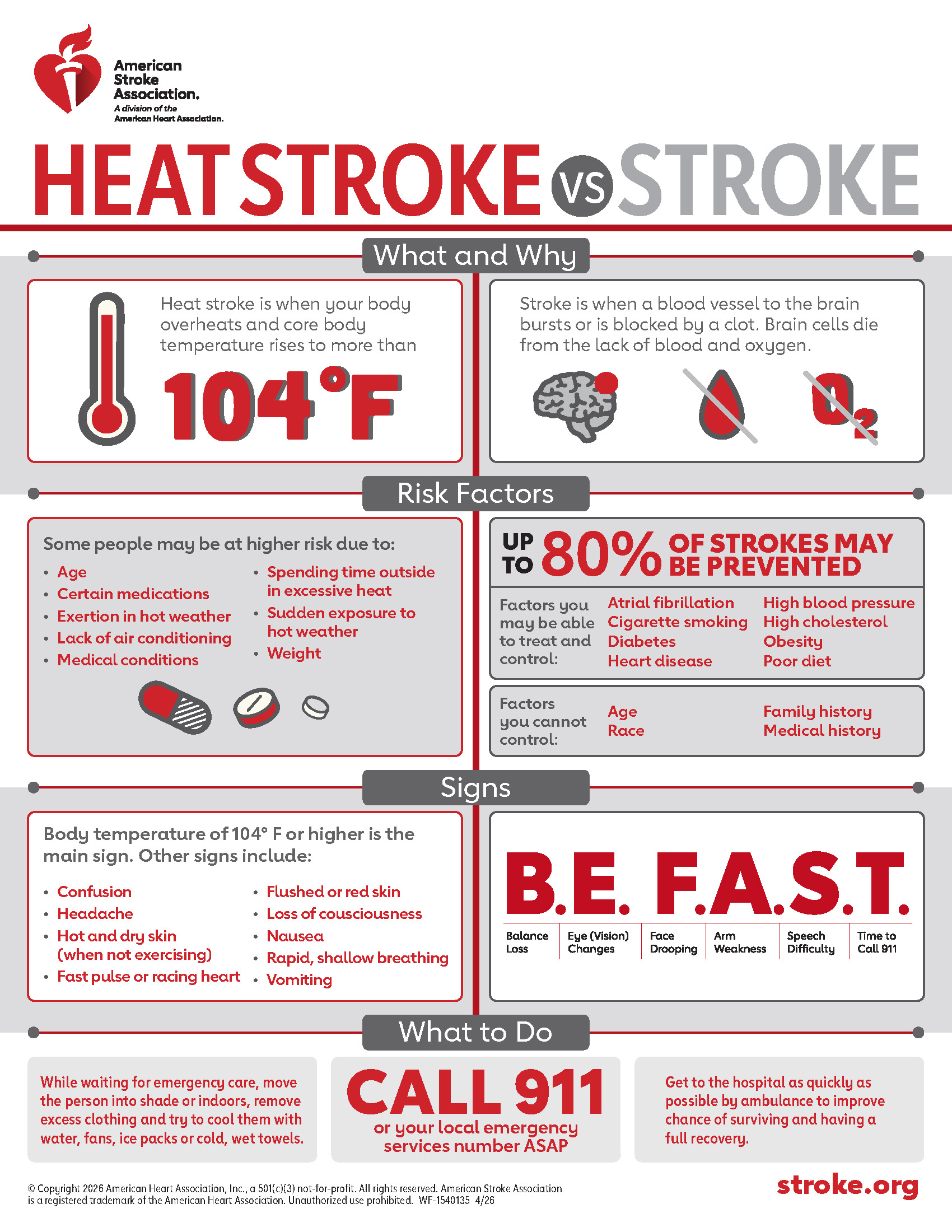
Full text - Heat Stroke vs. Stroke Infographic
Heat Stroke vs Stroke - Do you Know the Difference?
- Confusion
- Headache
- Hot and dry skin (when not exercising)
- Fast pulse or racing heart
- Flushed or red skin
- Loss of consciousness
- Nausea
- Rapid, shallow breathing
- Vomiting
How to Stay Active in Warm Weather
When the temperature goes up in the summer months, exercising outside can become challenging. Even heat-loving, sun-seeking exercisers can become overheated when the sun is beaming down in the heat of the day.



Staying active this summer as a family
Be a role model for an active lifestyle. Start moving more yourself and find ways to be active together as a family.
Physical activity should be fun for children and adolescents. Encourage kids to keep trying activities to discover the ones they like and will stick with long term.
Reduce or limit sedentary screen time, including watching television, playing video games and using a digital device.
Provide kids with opportunities to be active. Give them active toys and games, like bikes, skateboards, roller skates, scooters, jump ropes, balls and sports equipment.
Get familiar with community facilities near you, like pools, recreation centers, bike paths and parks.


More July Calendar Highlights

7/24 - 8/30 - National Fishing Month - 10 Ways to Relax in Nature and Stress Less


7/3-8/11 - Dog Days of Summer - When the heat rises, so do heart risks: What you need to know

7/4 – Independence Day: Holiday celebrations often mean time outdoors. Stay mindful of the heat by taking these steps to be safe in the heat.

7/11 – National Swimming Pool Day – Staying Safe in the Water
7/25 – National Drowning Prevention Day - Join our Nation of Lifesavers and learn CPR. The American Heart Association recommends CPR rescue breaths along with chest compressions in cases of drowning.
July 7 is National Day of Rock ‘n’ Roll
Tune in to some rock songs the American Heart Association’s ‘Don’t Drop the Beat’ playlist, which are between 100-120 per minute, the same rate at which you should perform compressions when doing CPR. Join our Nations of Lifesavers.
***********************************************************************
Video: 4 Ways To Make This Summer Safe and Fun
Transcript (doc) | Video copyright American Heart Association 2025
Song: Tropical Summer Night/ Royalty Free

7/31 - National Avocado Day - Try these avocado recipes for this summer

National Blueberry Month - Check out these recipes for everything from heart healthy muffins to smoothies.

National Watermelon Month - Beat the heat with hydrating foods this summer.

Minority Mental Health Awareness Month
Stress may contribute to poor health behaviors linked to increased risk for heart disease and stroke, such as:
- Smoking
- Overeating
- Lack of physical activity
- Unhealthy diet
- Being overweight
- Not taking medications as prescribed
- Combatting stress to improve the heart health of the Hispanic/Latino community (AHA News release)
- Asian American, Native Hawaiian and Pacific Islander adults less likely to receive mental health services despite growing need (AHA News release)
- Mental Health and Wellbeing Tips | Self-Care Isn't Selfish Infographic
- More stress reduction tips | infographic text
More Resources:
- American Heart Association Fact Sheets
- Follow the latest National Science and Program News and Your Local News (search by category/region)
Follow @HeartNews | Connect with us
